
This one’s for the Brits… 🇬🇧
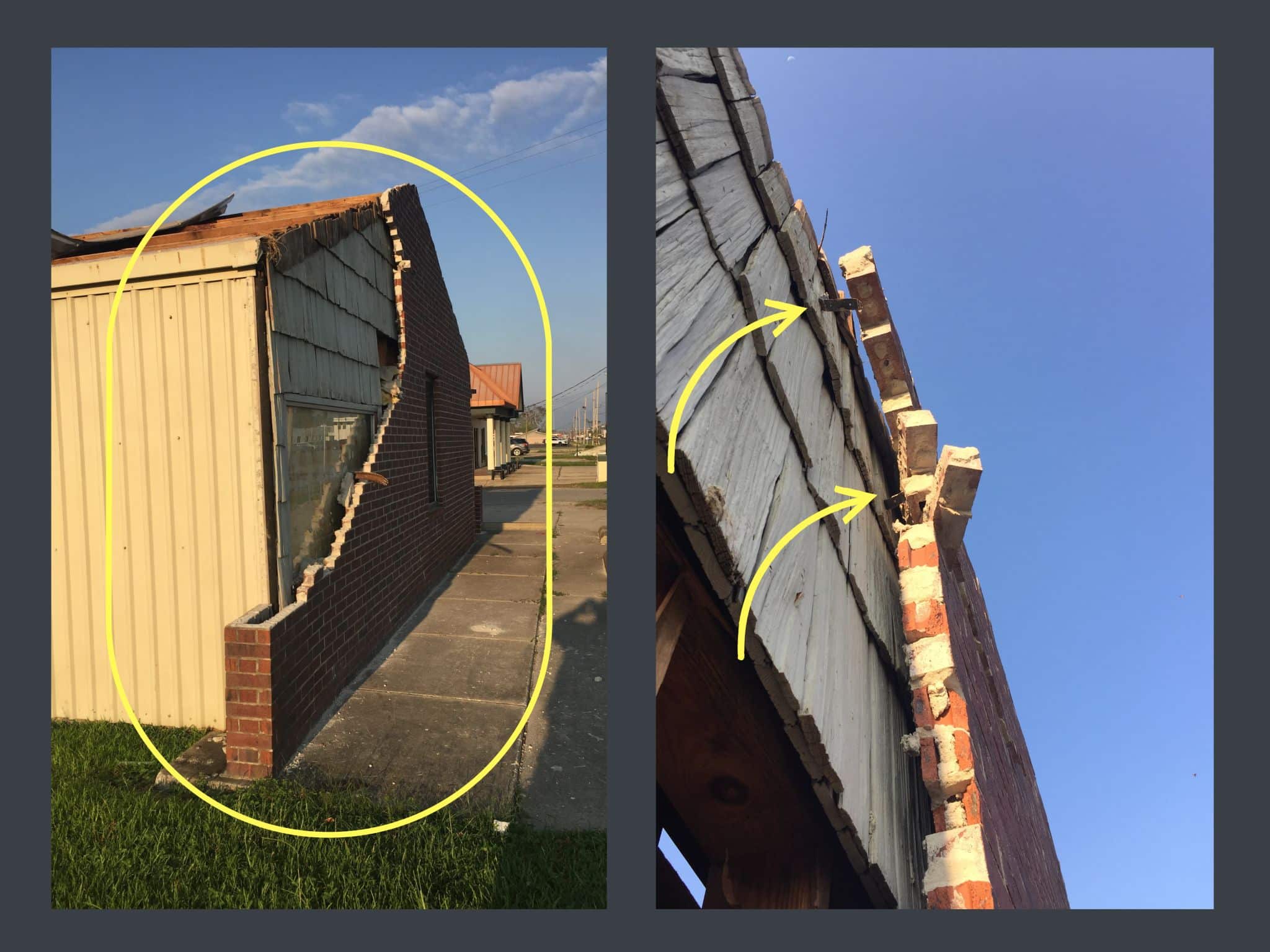
I was called to investigate hurricane damage on a building in Louisiana, and on my way, what I found on this building genuinely stopped me in my tracks.
The original structure was a steel-framed shed with old timber shingles fixed to the exterior. At some point, someone decided it would be a good idea to install a brick veneer gable over the top of it.
But here’s the problem…
The wall ties had been fixed straight through the old timber shingles instead of into a proper structural backing.
Nobody would ever have seen this from the outside. The veneer looked perfectly normal — until the storm damage exposed what was really holding the wall together.
In the second photo, the yellow arrows show the wall ties that were supposedly restraining the brick veneer.
They were severely corroded.
This is exactly why masonry investigations matter.
Sometimes the real problem is hidden behind the wall for decades until wind, moisture, or movement finally exposes it.
And once again, it proves an important point:
Just because a brick wall looks solid…
doesn’t mean it actually is.