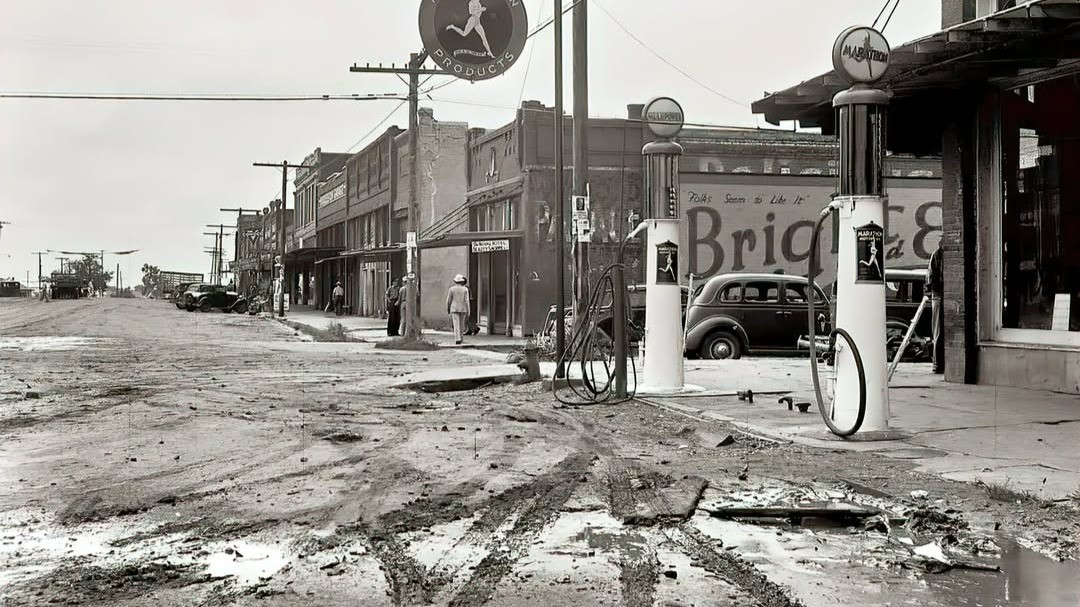
When aging infrastructure is discussed, attention usually turns to roads, bridges, water lines, sewer systems, and utilities. But in a historic town such as Caddo, the existing building stock should also be considered an important community asset.
Older masonry buildings require a very different approach from modern construction.
Brick walls, mortar joints, parapets, lintels, foundations, roof drainage systems, and structural connections can deteriorate gradually over decades. Water infiltration, inappropriate repairs, corrosion of embedded metals, movement, neglected roofs, and incompatible modern materials can accelerate that deterioration.
A relatively minor defect left unattended can eventually become a significant structural and financial problem.
This makes inspection and preventative maintenance particularly important.
Instead of waiting until a wall is visibly leaning, masonry is falling, or a building has deteriorated to the point where demolition appears to be the only practical option, communities can identify problems earlier and develop repair strategies over time.
The Funding Challenge
Caddo faces a problem common to many small rural communities: the buildings and infrastructure may be substantial, but the financial resources available to maintain them are comparatively small.
A large city can spread infrastructure costs across hundreds of thousands of taxpayers and businesses. A small town cannot.
When municipal budgets must support roads, utilities, emergency services, public buildings, and everyday operations, historic building preservation can easily move down the priority list.
Private property owners face similar difficulties.
Repairing a historic masonry building correctly can require specialized contractors, engineers, architects, preservation consultants, and materials that may not be readily available locally. Owners may therefore postpone repairs or choose inexpensive short-term solutions that sometimes create more serious problems later.
The Knowledge Gap
Money is only part of the problem.
Historic buildings require knowledge.
A contractor experienced primarily with modern construction may not necessarily understand a masonry building constructed generations ago. Historic lime mortars, multi-wythe brick walls, traditional foundations, timber structural systems, old lintels, parapets, and historic drainage details behave differently from modern building systems.
Applying modern repair methods without understanding the original construction can unintentionally damage the very building being repaired.
Caddo therefore has an opportunity to approach preservation differently.
Before deciding how to repair a building, first understand how it was built and why it is failing.
That means documenting existing conditions, investigating construction methods, identifying moisture sources, understanding structural movement, and determining which materials are compatible with the original masonry.
From Emergency Repairs to Preventative Maintenance
One of the most effective changes a small town can make is moving from emergency response to planned maintenance.
A historic building that receives regular roof, drainage, masonry, structural, and exterior inspections is far more likely to survive than one that receives attention only after pieces begin falling from the façade.
A community-wide building condition survey could help identify properties requiring immediate attention while separating them from buildings needing only routine maintenance.
Buildings could then be considered according to urgency: immediate public-safety concerns, significant deterioration requiring intervention, preventative repairs, and routine monitoring.
That information would give property owners and community leaders a much clearer picture of the condition of Caddo’s historic building stock.
Preservation Can Be Economic Development
Historic preservation should not automatically be viewed as an expense.
Caddo’s older buildings are assets that cannot simply be recreated once they disappear.
Historic commercial buildings can accommodate restaurants, offices, shops, galleries, professional services, apartments, visitor attractions, and community spaces. Their architecture gives a town something increasingly difficult to manufacture: identity.
Across America, many communities compete to create attractive, walkable town centers. Small historic towns already possess much of that character.
The challenge is keeping it standing.
Preserving Caddo’s historic buildings can therefore become part of a broader strategy involving tourism, local business development, community identity, and reinvestment rather than being treated solely as an architectural concern.
Partnerships Will Be Essential
Caddo does not have to address these challenges alone.
State and federal programs, preservation organizations, universities, engineers, architects, specialist contractors, nonprofit organizations, neighboring communities, and private investors can potentially contribute knowledge, funding, training, or technical assistance.
The first step, however, is understanding what exists and what condition it is in.
Document the buildings.
Record their history.
Inspect their condition.
Identify the most urgent problems.
Develop realistic repair priorities.
Then begin matching individual projects with appropriate expertise and potential sources of funding.
Protecting Caddo’s Next Hundred Years
The question facing Caddo is not simply whether its old buildings can survive another few years.
It is whether today’s generation can establish a strategy that allows them to survive another fifty or one hundred.
Every historic building lost removes another physical piece of the town’s story. Conversely, every building successfully stabilized, repaired, and returned to productive use strengthens the community.
Caddo’s aging infrastructure is therefore both a challenge and an opportunity.
With careful investigation, preventative maintenance, appropriate repair methods, outside partnerships, and long-term planning, the town can protect the buildings and infrastructure inherited from previous generations while adapting them for the generations still to come.
The goal should not simply be to save old buildings.
It should be to keep Caddo’s history useful, occupied, and standing.