In most small towns, history fades quietly.
In Caddo, Oklahoma, the Moon Mystery never has.
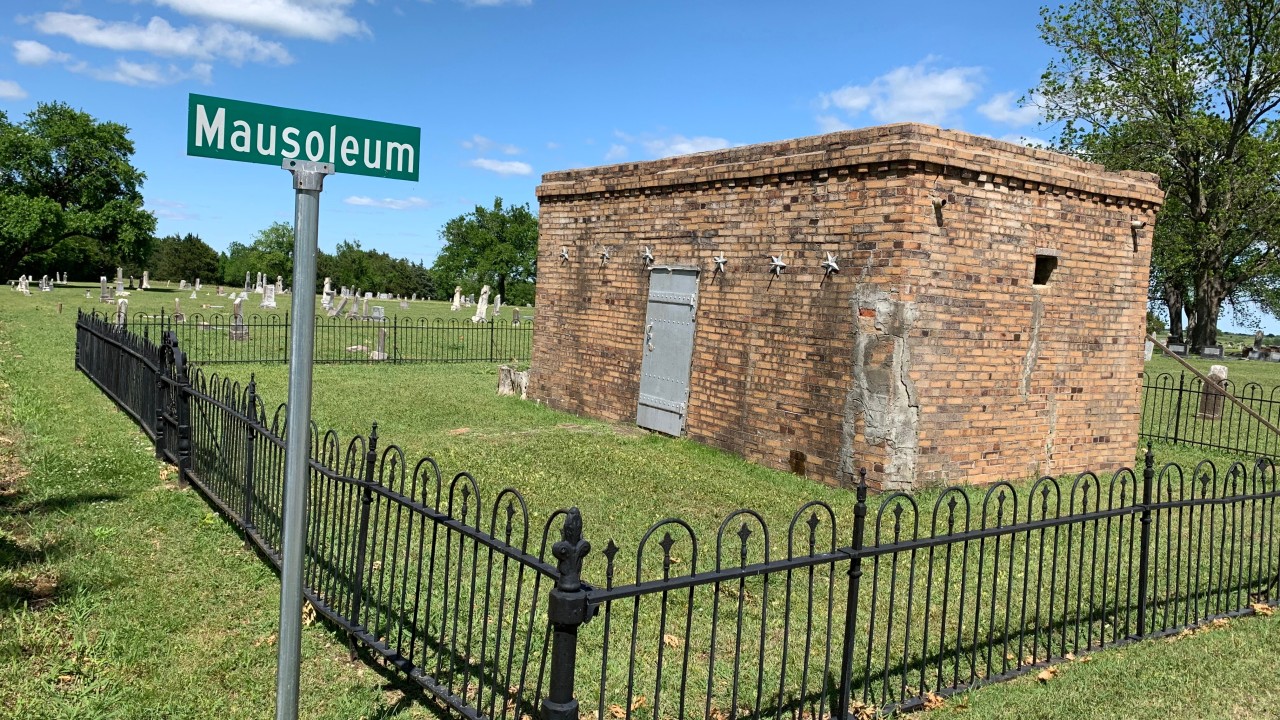
For decades, children dared each other to approach a small brick mausoleum in the cemetery. Inside, locals said, lay a woman in a glass-covered coffin, dressed in jewelry as if she were only sleeping. Parents warned their kids away. Teenagers slipped in anyway.
It sounds like folklore.
It isn’t.
It’s documented history—and at its core is a successful businessman, a sudden tragedy, and a very old-fashioned expression of grief.
At the turn of the twentieth century, W. J. Moon was one of Caddo’s leading merchants. His general store sold nearly everything: groceries, dry goods, hardware, furniture, even coffins. Newspapers routinely described his trips to St. Louis to buy inventory for what they called his “mammoth store.” He built brick commercial buildings, developed multiple storefronts, and began construction on the Moon Hotel. By every measure, he was helping build the town’s economy and future.
Then, in the fall of 1904, while he was away on business, his wife Molly died by suicide.
No explanation survives. Only the aftermath.
Instead of a traditional burial, Moon built a brick mausoleum in the town cemetery and arranged for Molly’s body to be carefully preserved. He placed her in a $500 glass-covered casket—an extraordinary expense at the time. She was dressed well and buried with her diamond rings, pins, and a gold watch on a chain.
According to family accounts later shared by his granddaughter, he simply wanted her to look the way she always had.
His mourning was personal and physical. He reportedly visited daily at first, combing her hair and changing her clothes. Eventually a caretaker took over. For years, the mausoleum remained open, and visitors were allowed inside. The caretaker would even wind the watch placed around her neck.
By today’s standards, that feels unusual. But historically it wasn’t entirely so. Early twentieth-century mourning customs were often tangible and visible—mourning jewelry, post-mortem photography, elaborate memorials. Moon simply took that instinct further than most.
Over time, curiosity turned the site into local legend. Teenagers sneaked in. Families told stories. After vandalism, the structure was finally sealed—bars on the windows, door welded shut.
The spectacle ended. The memory didn’t.
Moon’s later years were marked by more loss. Two sons died young in separate accidents. His health declined. After moving to Dallas and remarrying, he died of cancer in 1923. His final request was to be returned to Caddo and placed inside the same vault he had built for Molly nearly twenty years earlier.
He was buried beside her.
Today the mausoleum still stands—quiet, unmarked, easy to miss unless you know where to look. Most people walk past without noticing it. Yet it remains one of the town’s most persistent pieces of history.
What makes the story endure isn’t the mystery. It’s the humanity.
A century ago, grief wasn’t hidden. It was built in brick and stone. People made their losses permanent, visible, architectural. Moon couldn’t control what happened, but he could build something that lasted.
And he did.
There’s something instructive in that: communities remember what we make tangible. Buildings, monuments, and stories often outlast the businesses and headlines that created them.
More than a hundred years later, a small brick vault still tells the story of one family—and one man who simply couldn’t let go.
Sources
• The Caddo Herald, business notices and obituaries (1899–1923) – Chronicling America https://chroniclingamerica.loc.gov
• Oklahoma Historical Society newspaper archives https://gateway.okhistory.org
• Durant Democrat (Caddo News section), 1923 obituary https://www.okhistory.org/research/newspapers
• Regional archives / Denison Herald interview with Valentine Moon Craig (1977) https://www.newspapers.com