Purpose, construction and limitations
A brick lintel spans the gap above an opening, such as a window or doorway. It supports the wall above and transfers that weight to the masonry at either side. By bridging the opening, the lintel helps prevent the surrounding brickwork from sagging or cracking.
Brickwork is naturally strong when compressed, but comparatively weak when pulled apart. That makes a simple, flat row of bricks a poor choice for spanning a wide opening or carrying a heavy load: the bricks and mortar may crack or separate under tension.
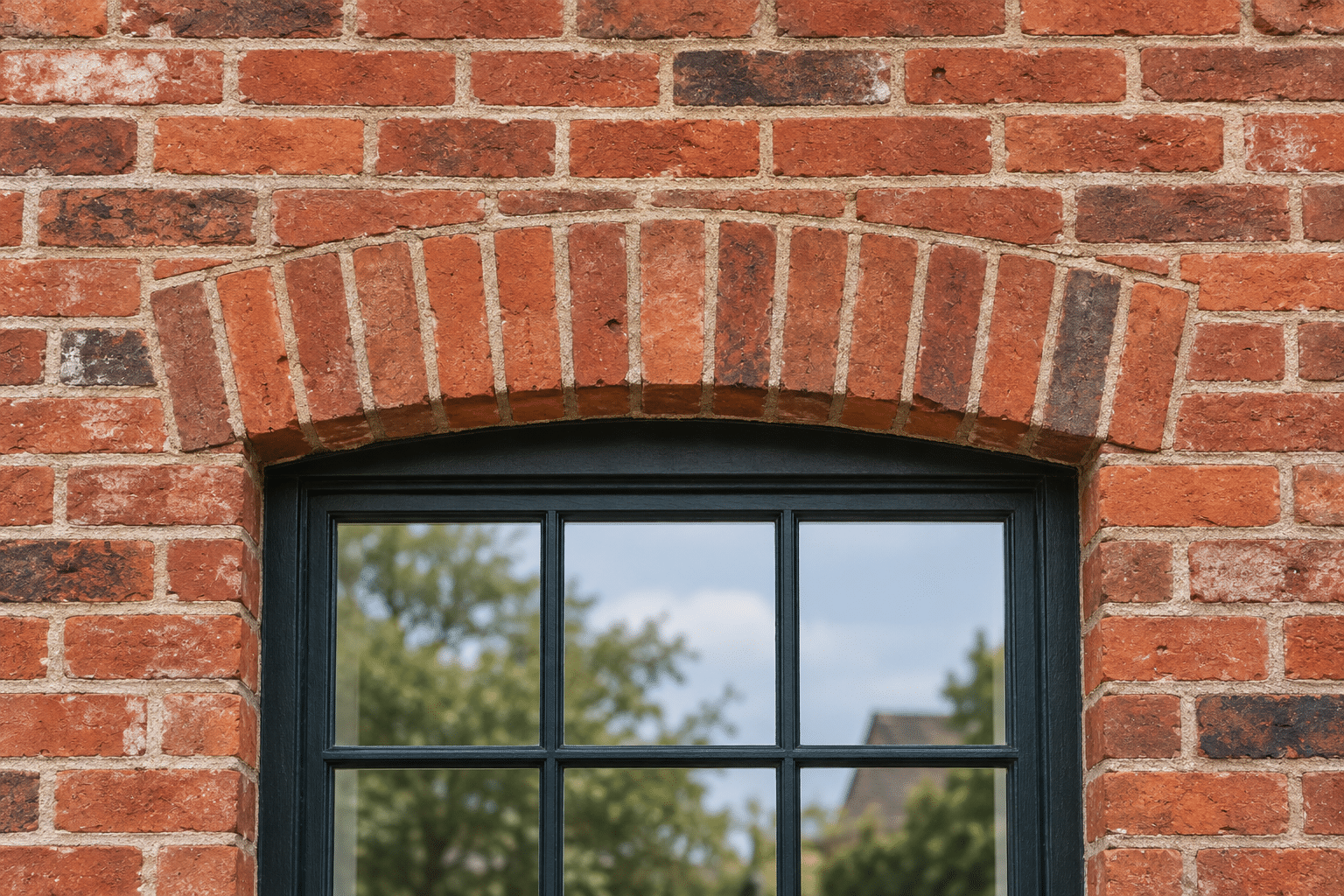
One traditional solution is a brick arch. Its curved shape directs the load downward and outward into the supporting wall, so the bricks press against one another. A shallow arch, called a segmental arch, can sit above a window or door while matching the surrounding brickwork. A soldier course—bricks placed upright on end—can also form the visible face of a lintel, though the appearance alone does not indicate how it is supported.
For wider spans or heavier loads, brick lintels may need additional support. This can include steel reinforcement embedded in the brickwork, or a concealed steel or concrete lintel behind a brick facing. The visible brick then blends with the wall while the stronger supporting element carries much of the load. The right arrangement depends on the opening’s width, the weight above it, the wall construction and local conditions.
Brick lintels have several practical benefits. They can match the wall in colour, texture and pattern, giving openings a traditional, unified appearance. Brick is durable and does not rot, and a well-built arch can last for many years. Because the lintel is made from the same material as the wall, it may also weather in a similar way.
Their limitations are mainly structural and related to workmanship. Brick lintels generally cannot span as far or carry as much weight as a properly designed reinforced-concrete or steel lintel. Building an arch requires careful setting out, suitable mortar and consistent workmanship; errors can leave the arch unable to transfer loads as intended. Settlement or movement in the surrounding wall may cause cracking, especially around the ends of the arch. Water penetration and freeze-thaw cycles can also damage bricks and mortar over time.
A sound brick lintel needs adequate support at both ends, correctly arranged masonry and detailing that keeps water out. Where the opening is large, the loads are substantial or the existing brickwork is cracked, a qualified building professional should assess the design and specify any reinforcement or concealed support.