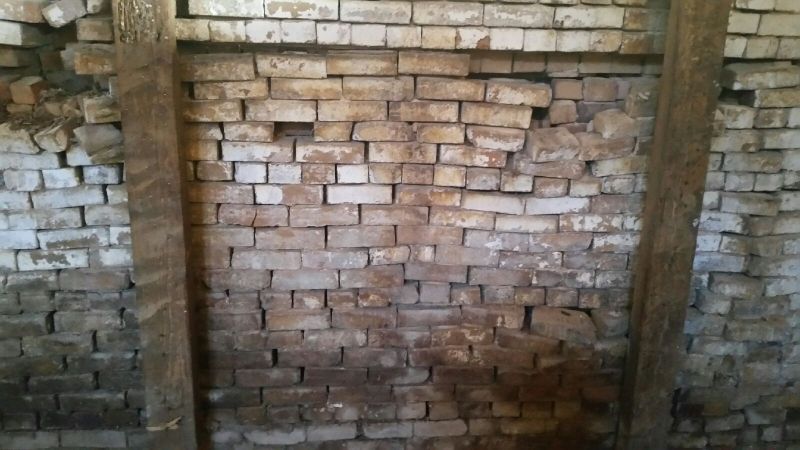
What Causes Dry Stacking in Old Bricks When Mortar Has Eroded to Nothing?
Dry stacking in old brick walls occurs when the original mortar, once binding the structure together, has deteriorated completely, leaving bricks precariously balanced on one another. This phenomenon is common in historic or neglected buildings and is a warning sign of potential structural failure.
The primary culprit is weathering. Over decades, exposure to moisture, temperature fluctuations, and pollution gradually weakens and washes away traditional lime-based mortars. Unlike modern Portland cement, historic lime mortar is softer and more porous, designed to “breathe” and accommodate slight movements in the wall. While this was once a benefit, years of water infiltration, freeze-thaw cycles, and lack of maintenance can reduce the mortar to dust.
When the binding agent vanishes, bricks begin to shift under their own weight and from external pressures like wind or ground movement. The result? A dry-stacked appearance where the wall is held together only by friction and gravity. The photo you see illustrates a wall dangerously close to collapse, bricks misaligned, bowed, and missing in spots.
Structural risks increase exponentially in this condition. Without the cohesive force of mortar, walls can bulge, lean, or suddenly collapse. Restoration requires more than just re-pointing; it may involve disassembling sections, re-bedding bricks, and applying compatible lime mortar.
Dry stacking in eroded walls is not a charming sign of age—it’s a structural red flag. Timely intervention by masonry professionals is essential to preserve both the wall and the safety of those around it.