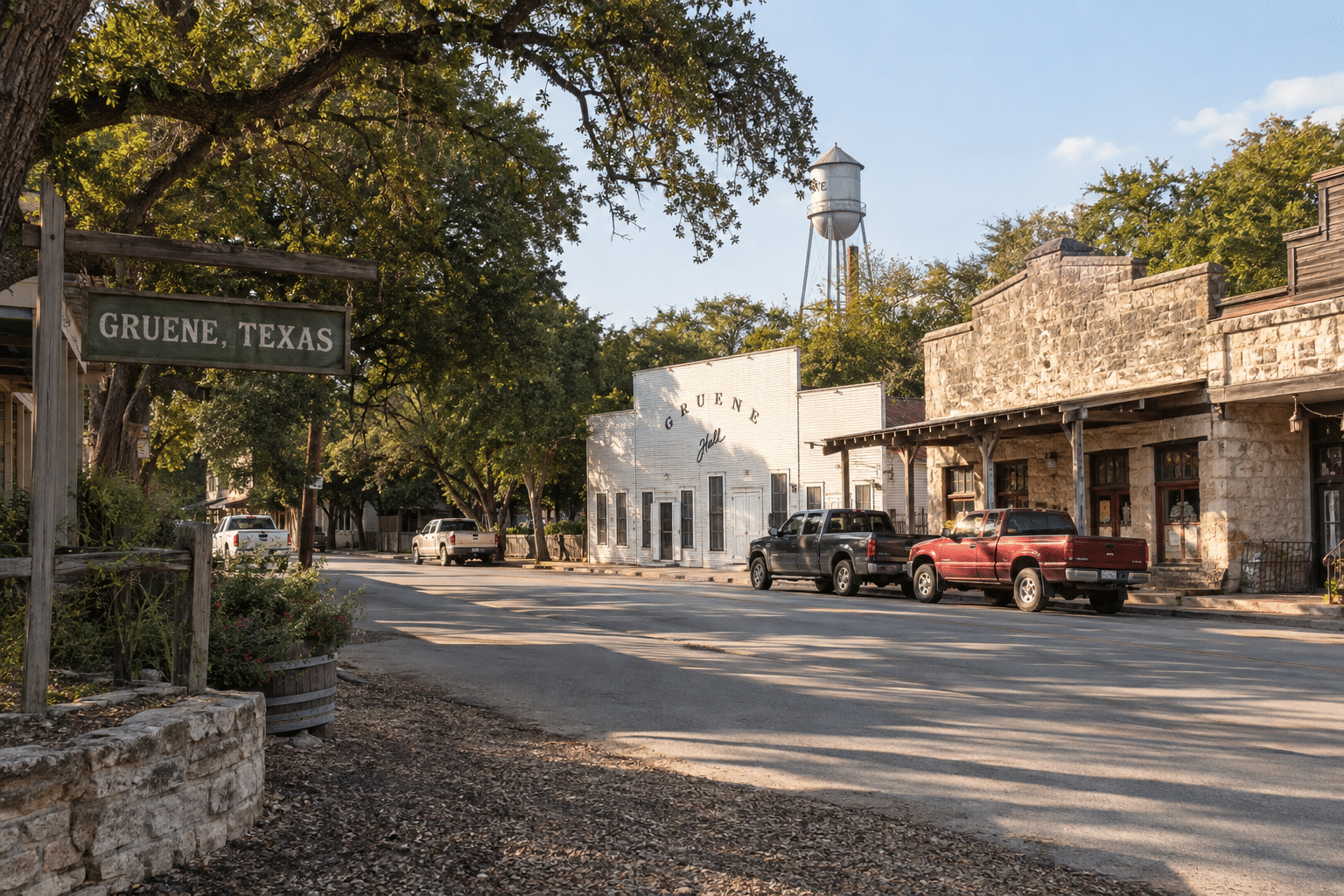
Texas Small Towns: Growth, Decline, and the Work of Renewal
Texas small towns were built around connection. In the nineteenth century, county seats, river crossings, forts, agricultural markets, and railroad depots became places where people traded, worshipped, attended court, and exchanged news. The courthouse square or Main Street was not simply a business district: it was the public room of the community. As settlement moved westward and railroads spread across the state, towns on the line gained access to markets, migration, information, and investment, while bypassed places often lost both commerce and status. By 1910, Texas had more than 13,000 miles of railroad in operation, and the rail network had decisively shaped the location and prospects of towns across the state. Texas State Historical Association
For many communities, the period from the late nineteenth century through the early twentieth century was a high point. Cotton, cattle, timber, oil, and local trade supported stores, banks, hotels, newspapers, schools, and substantial public buildings. County courthouses, especially, expressed the ambitions of the era. Texas’ “golden age” of courthouse construction began in 1881, and many town squares grew up around these buildings as centers of government, business, celebrations, and civic life. Texas Historical Commission
But the forces that created small towns could also undermine them. As agriculture mechanized, fewer workers were needed on farms and ranches. Young people left for college, military service, and jobs in larger cities. Rail service diminished, and highways often rerouted traffic away from old commercial cores. Later, chain retail, shopping centers, and online commerce made it harder for locally owned downtown businesses to compete. Some towns adapted by becoming regional service centers, tourist destinations, or bedroom communities near growing metropolitan areas. Others saw population loss, vacant storefronts, deteriorating buildings, and shrinking tax bases.
The central challenge today is that historic character is valuable but costly to maintain. A small town may have an extraordinary courthouse, theater, hotel, or collection of early storefronts, yet lack the money for roofs, foundations, utilities, accessibility upgrades, professional design work, or a dedicated downtown manager. Preservation grants frequently require matching funds, while property owners may not have the capital to undertake rehabilitation. Even an energetic volunteer corps cannot indefinitely replace municipal capacity, skilled trades, or steady investment. The Texas Main Street Program itself is clear that volunteers are essential, but that successful revitalization also requires paid staff and sustained local support. Texas Main Street Program
Texas has nevertheless built one of the nation’s strongest networks for downtown renewal. Established in 1981, the Texas Main Street Program uses preservation as an economic-development strategy. Its approach combines organization, economic vitality, design, and promotion: communities build partnerships, improve historic buildings and public spaces, support small businesses, and market an identity rooted in place. The program provides technical assistance, training, planning help, and access to a statewide network. Since its launch, it has helped participating communities generate more than $6.5 billion in reinvestment, create over 50,000 jobs, and establish 12,900 small businesses. Texas Historical Commission
For towns not yet ready for designation, the Historical Commission’s First Street Initiative offers free education and peer networking, helping communities inventory assets, plan for preservation, and develop the civic foundation needed for a long-term revitalization effort. First Street Initiative Other tools matter as well: the Texas Preservation Trust Fund supports threatened historic resources through matching grants; state and federal historic-preservation tax credits can make rehabilitation more feasible; and the Texas Historic Courthouse Preservation Program provides planning, construction, and emergency grants for eligible county courthouses. Texas preservation funding
These programs cannot save every building or reverse every demographic trend. Some communities will continue to lose residents, and some landmarks will be too far gone—or too expensive—to restore. Still, preservation is not merely an effort to freeze a town in time. At its best, it gives a community practical tools to reuse its strongest assets, welcome new enterprises, and retain a visible connection to its past. The future of Texas small towns will not look the same everywhere, but their historic centers remain an important foundation from which renewal can begin.