Diamond Drilling: The Foundation of a Reliable Socked Anchor
Historic brickwork can be fragile, variable and unforgiving. When a wall has become unstable, installing cementitious socked anchors can provide valuable reinforcement, but the anchor will perform correctly only if its hole has been drilled correctly. Diamond drilling is the key to this.
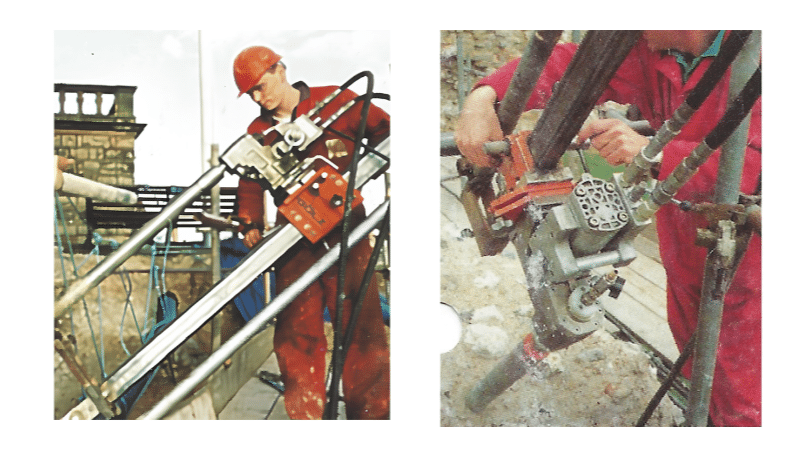
Controlled diamond drilling helps create an accurate hole while limiting vibration and disturbance to vulnerable masonry.
Percussion drilling can shake loose bricks, enlarge existing cracks and damage weak mortar joints. Diamond drilling is generally preferred because its cutting action produces much less vibration. With suitable equipment, firm support and an experienced operator, a clean hole can be formed at the specified diameter, depth and angle without placing unnecessary stress on the surrounding structure.
Accuracy matters throughout the drilling operation. The route of every hole should follow the engineer’s design and be checked for hidden services, voids and sensitive historic fabric. The drill must remain aligned so that it does not wander through the wall or break out through a face that is intended to remain undisturbed. Water and drilling residue must also be carefully controlled, particularly where historic finishes or moisture-sensitive materials are present.
Sock anchors are available in different forms and lengths; correct drilling allows the specified system to be inserted and grouted as intended.

After drilling, the bore must be inspected and cleaned in accordance with the anchor manufacturer’s instructions. Obstructions, loose debris or an incorrectly sized hole may prevent the anchor from reaching its required depth or stop the fabric sock from expanding evenly. When cementitious grout is introduced, the sock should inflate against the sides of the bore, controlling the grout while creating a mechanical bond with the surrounding masonry. An irregular, blocked or oversized hole can compromise this action.
In unstable historic structures, drilling is therefore not simply preparation for the repair—it is a critical part of the repair itself. Careful surveying, low-vibration diamond drilling, accurate alignment and proper bore cleaning give the cementitious socked anchor the best opportunity to distribute its load effectively while preserving as much original fabric as possible.
All work should be designed by an appropriately qualified structural engineer and undertaken by experienced operatives using the anchor manufacturer’s approved installation procedure.