Adaptive Reuse of Atlantic City’s Sandstone for the Smithsonian Castle Restoration
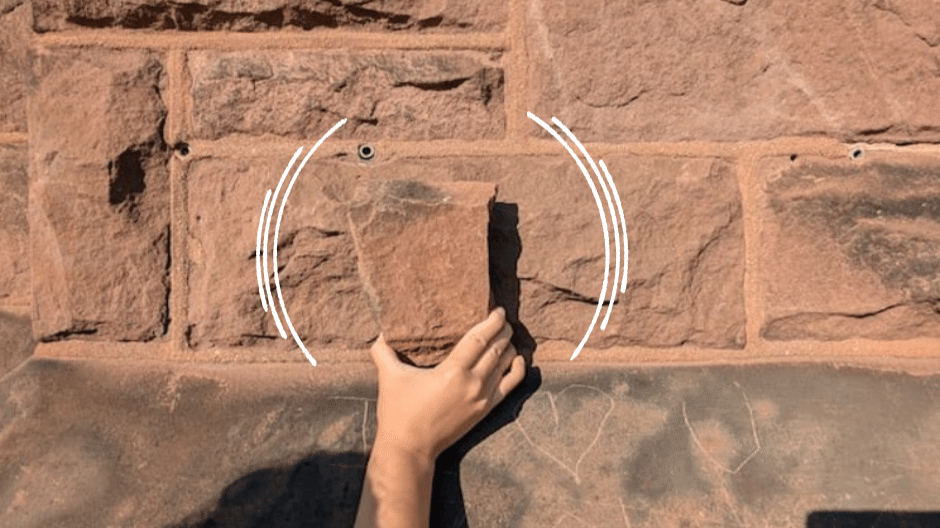
The demolition of the historic First Presbyterian Church in Atlantic City marks a rare convergence of sustainability, resource management, and architectural preservation. Built in 1867, the Romanesque structure featured a façade of rich red sandstone — a material both geologically significant and increasingly scarce. Rather than consigning this resource to demolition debris, preservation specialists and construction crews have undertaken a highly controlled process of deconstruction, recovering and repurposing the stone for critical restoration work on one of the nation’s most iconic buildings: the Smithsonian Institution’s Castle in Washington, D.C.
The Smithsonian Castle, constructed in 1855, is clad in Seneca sandstone quarried originally from Maryland. These quarries ceased operation in 1901, leaving restorers with limited access to authentic replacement material. The Castle’s distinctive red sandstone not only defines its Gothic Revival aesthetic but serves as a structural component integral to its long-term stability. When planning for the Castle’s first major restoration in fifty years, the Smithsonian’s design team faced the challenge of sourcing geologically compatible material capable of matching the original stone in both mineral composition and appearance.

Through a fortuitous connection — a design team member familiar with Atlantic City — the First Presbyterian Church was identified as a viable source. Although the stones originated from separate quarries, both structures drew from the same broad geological formation that extends across several mid-Atlantic states. Comparative analysis confirmed near-identical color, density, and weathering characteristics, making the Atlantic City stone uniquely suitable for the Smithsonian’s restoration objectives.
The salvage operation, led by SJ Hauck Construction, involves a labor-intensive, surgical removal of each sandstone block. Crews employ bucket trucks, handheld pneumatic tools, and controlled descent systems to safely extract the stone while minimizing damage. Stones are categorized, palletized, and transported under strict handling protocols to preserve their integrity for reuse. This controlled deconstruction not only allows for precise recovery but significantly reduces waste—diverting hundreds of tons of durable material from entering the waste stream.
Upon arrival in Washington, D.C., the salvaged stone undergoes additional preparation, including cutting, dressing, and carving to conform to the Smithsonian Castle’s ornate Gothic detailing. Because the stones serve both aesthetic and functional purposes—anchoring façades, resisting weathering, and supporting loads—material testing is performed to validate compressive strength, porosity, and long-term performance characteristics.

In this instance, a 19th-century church otherwise lost to time finds renewed purpose contributing to the continued life of a national landmark. The project stands as a model of integrated preservation practice — merging geology, craftsmanship, sustainability, and historic continuity into one unified effort to protect and extend the life of our built heritage.
The original article can be found at: https://www.inquirer.com/news/atlantic-city-first-presbyterian-church-smithsonian-castle-20250608.html