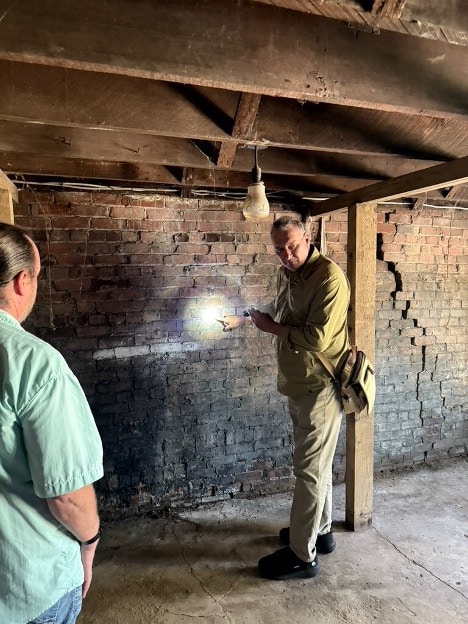

Before dampness was a defect, it was a medical emergency.
In the 19th century, people didn’t debate whether damp buildings were unhealthy. They knew they were. Physicians routinely linked damp interiors to respiratory illness, chronic fatigue, joint disease, and premature death. Entire housing blocks were condemned not because they were ugly—but because they made people sick.
And here’s the uncomfortable part: They weren’t wrong.
What they didn’t understand was why dampness persisted.
Medical professionals pressured architects and builders to “fix” damp buildings, but the construction industry lacked a working model of moisture movement. Water was treated like a nuisance—not a physical force governed by gravity, pressure, and capillarity.
So the industry guessed.
And guessing created a century of bad decisions.
The response to dampness was not drainage—it was ventilation. Builders punched holes into walls, added air bricks, hollowed masonry, and assumed that if air could move, moisture would somehow disappear. Evaporation became the strategy. Hope became the method.
What actually happened was predictable:
- Moisture entered walls and had nowhere to go
- Condensation formed inside cavities
- Organic materials stayed wet for long periods
- Interior air quality deteriorated
- Mold, bacteria, and pests flourished
- Walls became cold, damp reservoirs of contaminated air
Historic brick buildings didn’t just trap moisture, they stored it.
And that moisture didn’t stay politely inside the wall. It migrated inward. It cooled interior surfaces. It condensed behind finishes. It fed mold growth long before the word “mold” was part of building science vocabulary.
The health complaints were real:
- Chronic coughs
- Asthma-like symptoms
- Rheumatism and joint pain
- “Low vitality” and mental fatigue
- Musty air that never cleared
Today, we’d call these building-related illnesses. Back then, they were blamed on “bad air” and “damp conditions.” Different language. Same cause.
Here’s the brutal truth modern professionals still avoid:
Dampness does not become a health problem after it becomes a structural problem. It becomes a health problem long before cracks appear.
And the old mistake still shows up today.