
The Story of Sacred Heart Catholic Church in Palestine, Texas
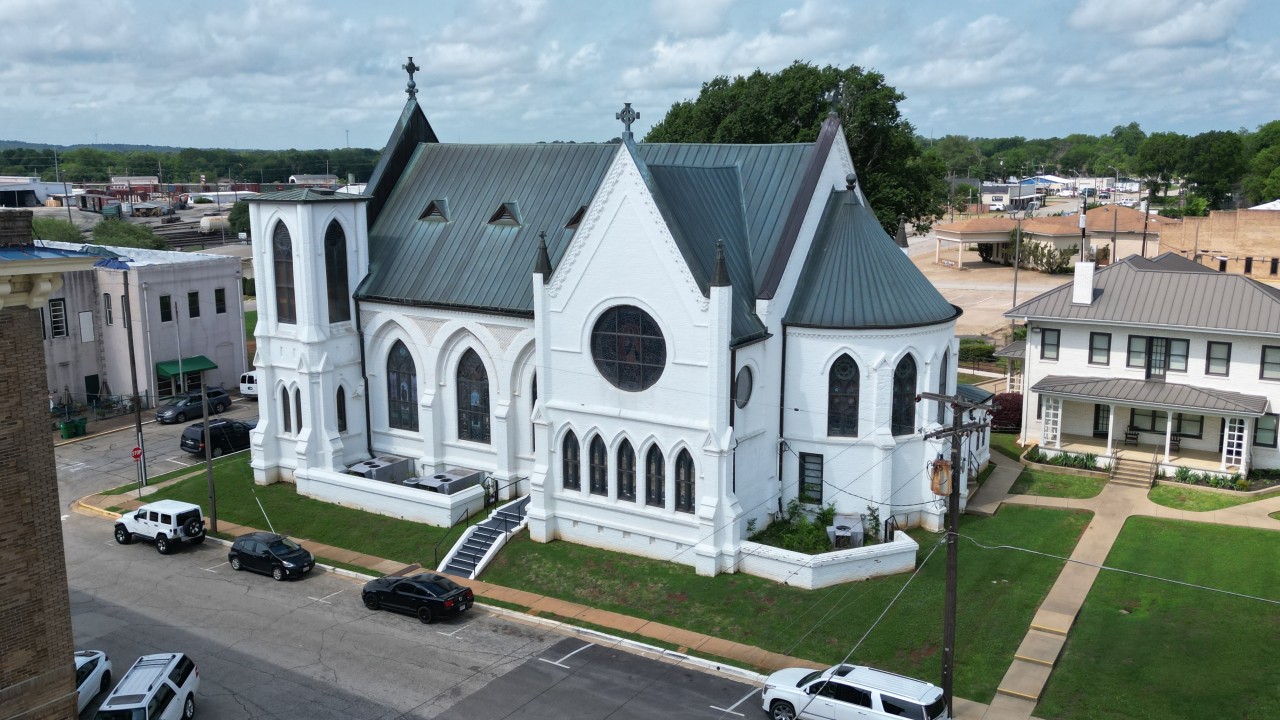
A few days ago I took this modern drone photograph of the beautiful Sacred Heart Catholic Church in Palestine, Texas — now standing completely painted white.
At first glance, it looks striking.
Clean. Bold. Almost European in appearance.
But for those of us involved in historic masonry restoration, the building immediately raises a difficult question:
Should a historic brick church from the 1800s ever be painted?
And in this case, the answer is far more complicated than most people realize.
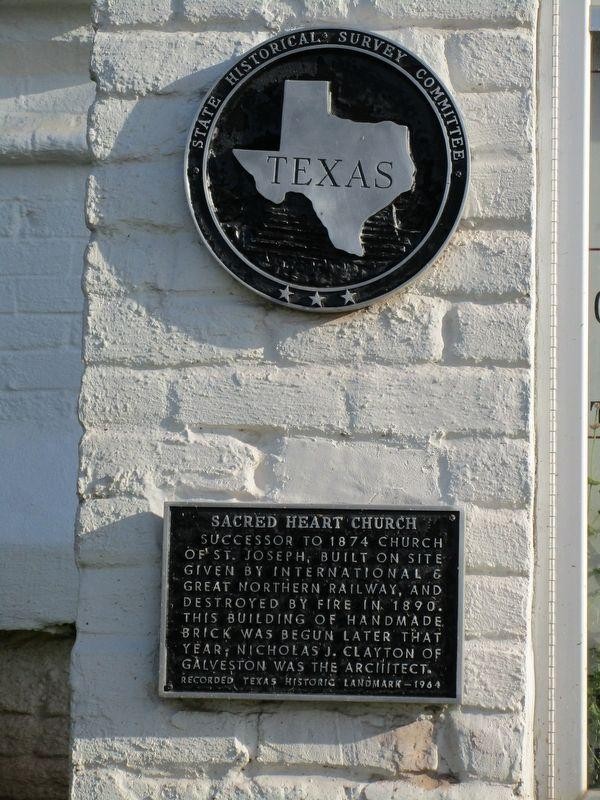
Sacred Heart Catholic Church is one of the most important historic masonry structures in East Texas. The current church was constructed between 1890 and 1893 after the original St. Joseph Catholic Church, built in 1874, was destroyed by fire. The replacement church was designed by renowned Texas architect Nicholas J. Clayton, one of the most influential church architects in Texas history.
What makes the church even more remarkable is how it was built.
Historical records state that approximately 675,000 handmade bricks were used in the construction. The clay mud was brought from the Trinity River by wagon and horse cart, then baked on site for the project.
Think about that for a moment.
Before modern trucks, forklifts, or mechanized production, workers hauled Trinity River clay by horse and cart, hand molded the bricks, fired them locally, and then constructed one of the finest examples of Victorian Gothic church architecture in Northeast Texas.
That is not just construction.
That is craftsmanship on a massive scale.
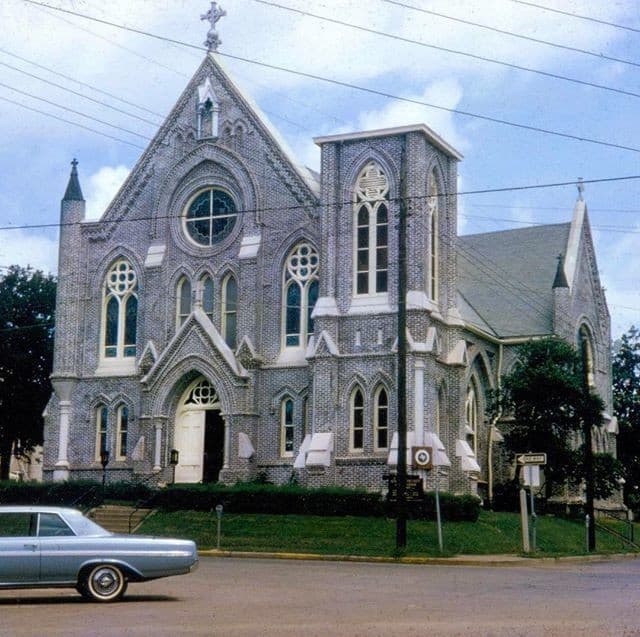

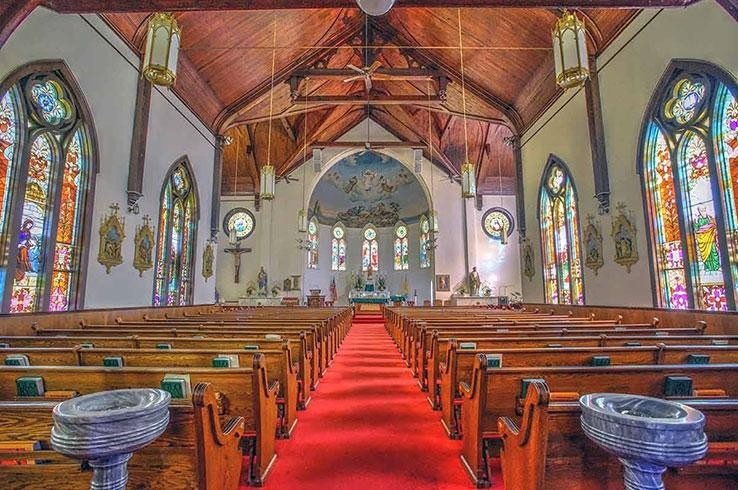
The church features Gothic arches, buttresses, stained glass imported from Italy and France, and one of the defining historic skylines in Palestine.
So why is it white today?

That is where the story becomes interesting.
I recently came across a comment from Bobby Freeman that provides important context behind the paint:
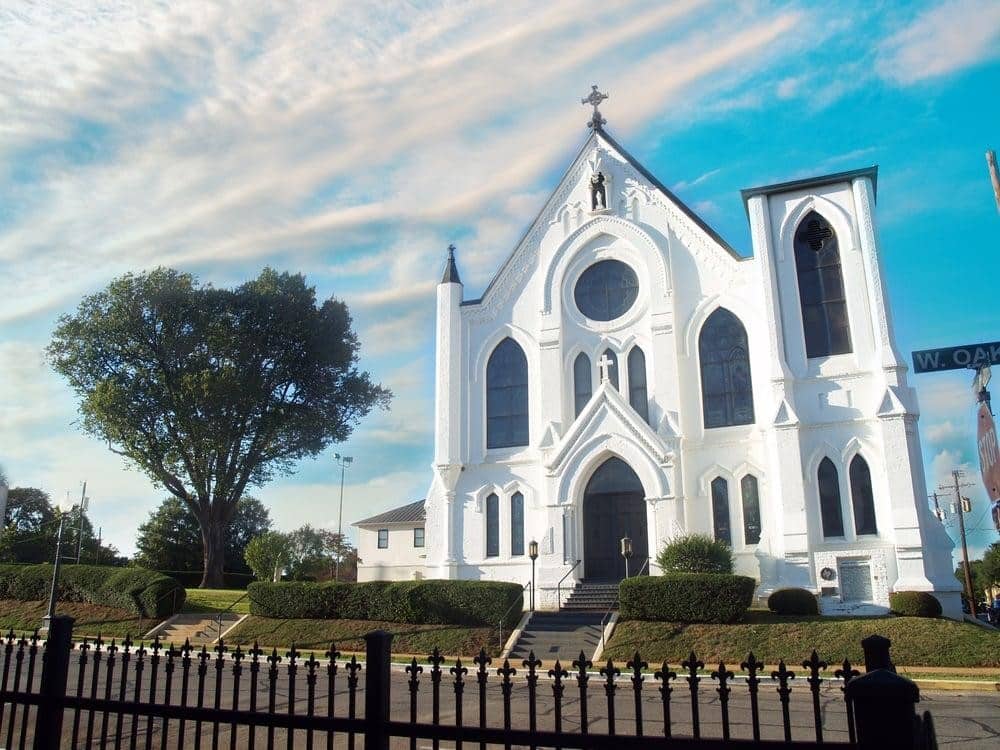
“My brother was the architect involved in restoring the church. After much research, he recommended a paint that would protect the poor quality brick from the elements and problems they were having with moisture infiltration. The white paint is a primer coat and was to be covered with a paint that closely copied the original color of the brick. Apparently, whoever was in charge at the church liked the white color and the job was never completed.”
That changes the conversation significantly.
This was not necessarily a careless decision to simply “paint over history.”
It appears the restoration team was attempting to address real masonry deterioration and moisture infiltration problems associated with aging historic brick.
And that happens more often than people realize.
Historic brick from the late 1800s was typically softer and more porous than modern brick. Over decades of Texas heat, rain, humidity, freeze-thaw cycles, and deferred maintenance, the outer fired surface of handmade brick can begin deteriorating.
Once that protective face starts failing, moisture penetration accelerates.
Architects and restoration teams are then faced with a difficult decision:
- Leave deteriorated brick exposed and risk further decay
- Replace massive amounts of original masonry
- Apply protective coatings to stabilize the surface
There is rarely a perfect answer.
As someone involved in masonry restoration, I understand both sides of the argument.
The preservation side of me hates seeing historic masonry covered, especially masonry made by hand nearly 135 years ago. Once painted, much of the natural variation, texture, and craftsmanship disappears forever beneath coatings.
Historic brick was originally designed to breathe.
When modern coatings trap moisture inside masonry walls, problems can develop later including:
- Spalling brick faces
- Peeling coatings
- Salt migration
- Hidden moisture retention
- Corrosion of embedded metals
- Interior plaster damage
And once a historic building is painted, it usually enters a permanent repainting cycle for generations.
But restoration is not always black and white.
If the masonry was severely deteriorated and absorbing water, the architect may have been trying to save the building rather than cosmetically alter it.
That is the difficult reality of historic preservation.
Sometimes you are not choosing between “perfect” and “wrong.”
You are choosing between imperfect solutions to keep a historic structure alive.
What fascinates me most about Sacred Heart Catholic Church is that the building now visually represents two competing philosophies in masonry preservation:
- The desire to preserve original historic materials exactly as they were
- The need to intervene practically to protect aging masonry from environmental failure
And perhaps that is why this church sparks such strong reactions.

Because the question is bigger than paint.
The real question is:
At what point does preserving a historic building require changing it?
Personally, I would have loved to see the original handmade Trinity River brick exposed and breathing naturally.
But I also recognize the reality that historic masonry buildings in Texas often develop severe moisture-related deterioration after more than a century of exposure.
Either way, this church remains one of the most extraordinary masonry landmarks in East Texas a structure literally built by hand, brick by brick, from Trinity River clay hauled by horse and wagon.

And whether you believe it should be painted or not…
Its story deserves to be understood before it is judged.